


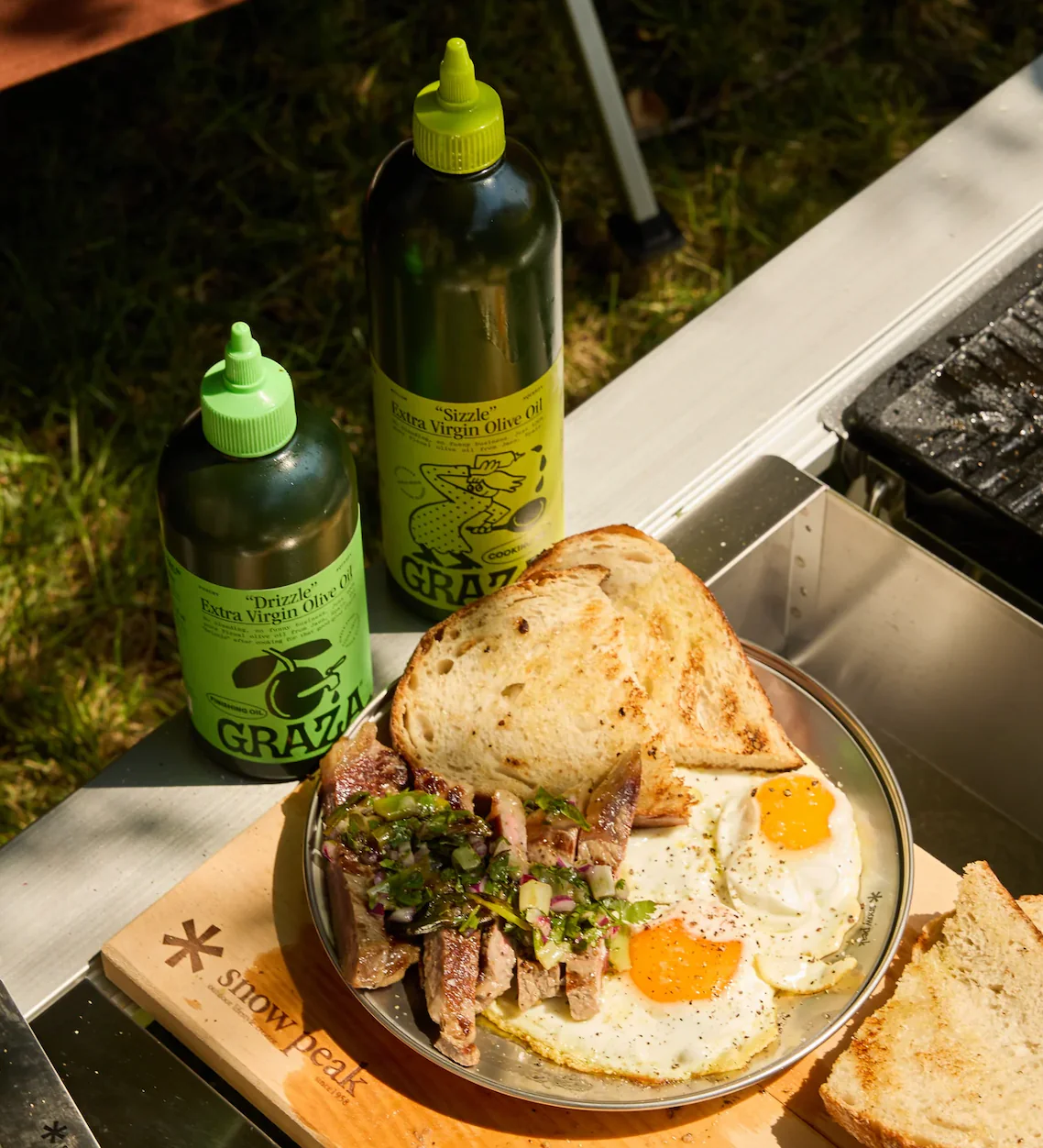
Andrew Rowat’s path to culinary imagery began far from glossy plates. With a degree in marine biology from the University of British Columbia, he was determined not to become a photographer. Yet, the universe had other plans. After a brief detour into theater, commerce, and web design, Rowat found himself accepting a graphic design job in Shanghai—an assignment that eventually led him to serve non-Chinese clients in an underserved market, sparking a full pivot into professional photography.
Once established, Rowat spent roughly 200 days a year on the road, capturing food and travel stories across the globe—from Hokkaido to Switzerland. His background in architecture greatly influenced his visual approach: he thinks in flat planes, building visual depth and focusing sharply on singular planes—whether that’s a plate set flat or a tower of plated food.
Light, Setup, and Planning: The Essentials of His Visual Style
For Rowat, great food photography begins with natural light. His rule of thumb: find a large window and let it do the work. Steam rising from a dish? Skip the overhead shot—opt for a straight-on or angled perspective. To minimize setup time and film costs, he’ll prep a dummy plate off-camera if the real dish is lost on shoot timing or budget.
Equipment choices are deliberate. He uses a jewelry tent—a makeshift softbox to diffuse light and avoid shiny reflections in food, particularly in liquids. For overhead shots, a Manfrotto 055 tripod with a horizontally extended arm ensures stability, while a cable release prevents camera shake when shooting from elevated positions.
Often shooting on film, Rowat embraces its tactile, textured quality. He compares it to fabric: film conveys a different “hand” than digital, offering a subtle richness that heightens the sensory feel of food imagery.
Logistics Matter: Why Planning Counts for 90% of Every Shoot
Rowat insists that most of the work happens before arriving on location. International food shoots demand coordination: he sometimes covers five locations and six shoots per day, moving from the airport directly into sessions. Travel photographers like writers face different needs—he requires permissions, shared schedules, and local facilitation. Hiring a fixer—someone fluent in the language and well-connected—is essential. It’s a catastrophist (risk-averse) approach that parallels his upbringing: his father was the head of a major emergency department in Canada.
Without this preparation—equipment checked, local contacts arranged, scheduling confirmed—a shoot can fall apart. Rowat’s approach mirrors the rigor of large-scale architecture work: detailed execution, built-in failsafes, and an unshakeable plan.
Instagram and the Democratization of Food Photography
Rowat sees Instagram not as trivial—but as a democratic extension of food photography’s long cultural arc. People worldwide are inspired to share meals, culinary creations, and cooking experiences. That’s tied closely to the celebrity status chefs now enjoy. As professional food culture becomes more mainstream, so does interest in how food looks. Instagram provides instantaneous, bite-sized visuals that turn cooking into a form of accessible celebration.
In his own words, Instagram is “a ton of fun,” especially for its visual immediacy. While he acknowledges the philosophical debate—“do I care what you ate for breakfast?”—he leans into Instagram’s power to bring images quickly to life.
Key Takeaways for Aspiring Food Photographers
Embrace architectural framing. Think in planes of focus. Use form and structure—even in food—to guide the viewer’s eye.
Use natural light wherever possible. A large window and soft diffusers make the difference between professional and amateur visuals.
Invest in the right gear. A jewelry tent and stable tripod are underrated tools; a cable release helps eliminate blur.
Plan meticulously. Liaisons, travel logistics, shoot schedules, and local language support ensure you can focus on shooting—without scrambling.
Shoot in film if you can. Its tactile aesthetic creates warmth and atmosphere that digital often lacks.
Join the visual conversation. Whether via Instagram or another platform, share your food visuals widely—food is art for everyone.
Bringing It All Together
Rowat’s career journey—from marine biology student to international food photographer—highlights a bigger truth: craft is shaped as much by character and curiosity as it is by equipment. His disciplined architectural mindset, technical care, and love for storytelling through visuals elevate food imagery beyond mere documentation.